Post conference Trips

Three Excursions

The excursions can be booked during your registration process

Overall organisation and contact for all excursions: Beverley Tkalcec, [email protected]

Eifel Volcanic Fields
22 persons
3 days

€ 275 — Saturday, 15. August (8 a.m.) to Monday, 17. August (7 p.m.)
Nördlinger Ries Crater
20 persons
3 days

€ 350 — Saturday, 15. August (9 a.m.) to Monday, 17. August (7 p.m.)

Rhine & Wine
16 persons
2 days

€ 300 — Saturday 15. August (9 a.m.) to Sunday, 16. August (8 p.m.)

Excursion Details

Eifel Volcanic Fields


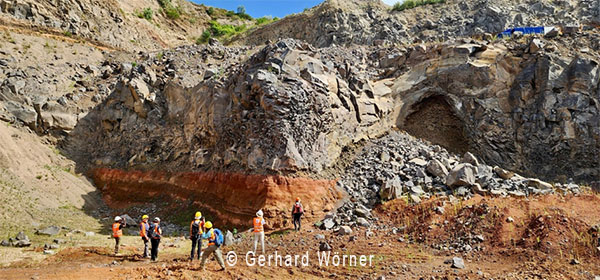
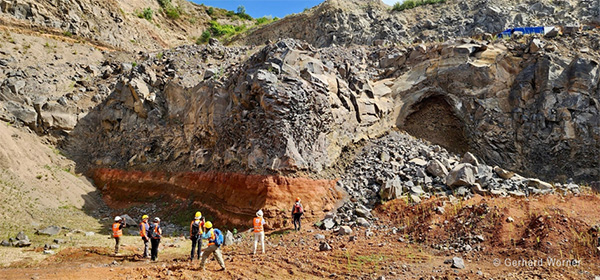
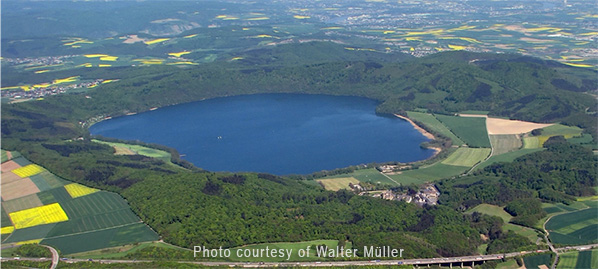
3-day excursion to the Vulkaneifel UNESCO Global Geopark, the land of maars and volcanos, visiting several volcanic maars, lava flow, underground lava quarry and volcano brewery.

Personal field gear will be required and is essential for participation. We strongly recommend sturdy boots, protective clothing against rain, drinking bottle, sun protection. Hard hats and safety vests will be provided by us.

Cost: € 275

Dates

  • Saturday, 15. August (8 a.m.) to Monday, 17. August (7 p.m.)

Accomodation

  • Overnight accommodation in the “Naturfreundehaus Laacher See“ in Mendig (in shared 3-bed, 4-bed and 5-bed rooms)

Lead by

Party size

  • 22 persons

Included in the price:

  • Coach transfers to and from Frankfurt University
  • Visit to volcanic deposits of the Laacher volcano and volcanic features of mafic alkaline intra-plate volcanism: scoria cones, lava flows
  • Entrance to German Volcanological Society museum
  • Guided tour of the underground lava quarry
  • Hotel accommodation (2 nights) in shared rooms incl. breakfast
  • Lunch packets on Saturday, Sunday, Monday
  • BBQ on Saturday evening

Not included in the price:

  • Sunday evening dinner in the “Volcano Brewery” (à la carte)

Highlights


  • We travel by coach from Frankfurt to the Vulkaneifel UNESCO Global Geopark where we enjoy panorama views of the volcanic landscape from various sites.
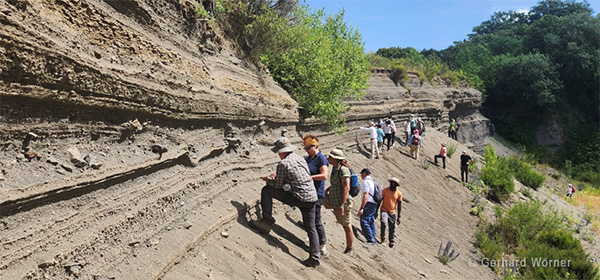
  • We examine tephra depositis, documenting volcanic and magmatic processes, magma differentiation and mixing at different exposures around the famous Laacher See crater (13 ka), as well as lava flows, scoria cones and maars.
  • We visit the museum of the German Volcanological Society and enjoy a guided tour of the underground lava quarry
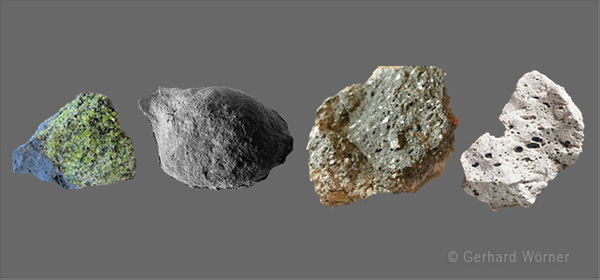
  • In the nephelinitic phreatomagmatic deposits at the Ulmen Maar and the Deudesheim Maar we see typical maar deposits and sample fresh mantle xenoliths.
  • We enjoy a typical German barbecue and camp fire on Saturday evening, and traditional à la carte German food in the volcano brewery on Sunday evening.
Background

About the Eifel volcanic field

Quaternary volcanism in the East and West Eifel Volcanic Fields is characterized by the eruption of alkaline mafic (basanitic, nephelinitic leucititic) and evolved phonolitic magmas. It is also the type locality of maar explosion craters.

 The phonolitic Laacher See volcano (13.000 a) in the East Eifel deposited a complex plinian and phreato-plinian tephra sequence indicating variable magma discharge and interaction with meteoric water. The chemical composition of juvenile pumice clasts reflect systematic eruption from a compositionally zoned magma reservoir from highly differentiated volatile-rich phonolite to strongly porphyritic mafic phonolite. Final erupted products represent phonolite-basanite hybrid mingled magmas. Cognate cumulate and carbonatitic syenites and contact-metamorphic xenolith from the magma chamber margins allow to reconstruct the shallow crustal magma system at unprecedented detail. Further, basanitic scoria cone deposits and CO2-driven amagmatic diatreme eruptions are also documented.

 The Westeifel is famous for unusually abundant young maar volcanoes and often coarse-grained lithic-rich deposits that formed during phreatomagmatic eruptions fueled by the interaction between ascending magma and meteoric water, and also by degassing of CO2-rich alkaline melts. Next to crustal fragments, these alkaline magmas also carried mafic cumulates derived from crystal cumulate bodies in the lower crust and many mantle xenoliths that we will sample in abundance. 
Program

Following schedule outlines the planned sequence of activities, tasks, or events organized by specific days and times.


8:00

Departure Frankfurt, arrive Mendig at 9:30

9:45

Stop 1

Lydiaturm: view from tower of Laacher See crater(s), short walk and ascent

10:15

Departure from Lydiaturm

10:30

Stop 2

Wingertsberg Laacher See Tephra (LST) Depositional facies, volcanic  stratigraphy

12:30

Lunch

13:00

Stop 3

Quarry “In den Dellen”, Laacher See Phonolite Tephra deposits

  • LST Stratigraphy, physical volcanology (proximal fall, flow, surge, mixed deposits)
  • Compositional zoninig (mafic crystal-rich phonolite to aphyric highly evolved phonolite)
  • Mineralogy/petrology of Laacher See phonolite magmas, magma mixing
  • Cognate lithics, cumulates, carbonatitic syenites, crustal xenoliths
  • collecting petrological samples and beautiful rare minerals (hauyne !!)

15:30

Stop 4

LST Fall-out Facies at Quarry near Nickenich, “Grube in der Streng” LST Stratigraphy, granulometry  

16:30

Check-in Naturfreundehaus Mendig

18:00

Dinner (BBQ)

19:30 – 21:00

Optional : Seminar on Eifel Volcanism

8:00

Breakfast

9:00

Departure

9:15

Stop 5

LST near vent- breccia facies, “Ruine Heimschule”

10:15

Stop 6

Walk along Laacher See lake shore, CO-2 degassing Mofetts

13:00

Lunch

14:00

Stop 7

Dachsbusch Scoria Cone

  • Wehr Tephra (Glees unit)
  • intra-crater tephra deformation by graviational movement
  • Dachsbusch basanitic scoria

16:00

Stop 8

CO2-Diatreme Glees Tephra from Wehr volcano and Veitskopf basanite Lavaflow cut by CO2–    

16:00

Stop 8

(Optional alternative) German Volcanological Society Museum and “Lavakeller” (underground lava quarr

18:30

Dinner at “Vulkan-Brewery”

7:30

Breakfast

9:30

Departure

10:30

Stop 9

Ulmen Maar, phreatomagmatic  maar tephra, youngest eruption in Eifel Volcanic Field

12:00

Stop 10

Pulvermaar

  • Nephelinitic phreatomagmatic surge deposits
  • Cogenetic lower crustal cumulate fragments
  • Deep crustal xenoliths

13:30

Lunch at maar-view-point near Schalkenmehren (50°10’24.05″N.  6°51’6.60″E)

14:30

Drive to Meerfelder Maar

15:30

Stop 11

Maar-deposit Deudesheim (Meerfelder Maar) Maar

  • Nephelinitic phreatomagmatic maar deposits, famous for abundant fresh mantle xenoliths

17:00

Return drive to Frankfurt, Arrive Frankfurt 19:00

Nördlinger Ries Crater


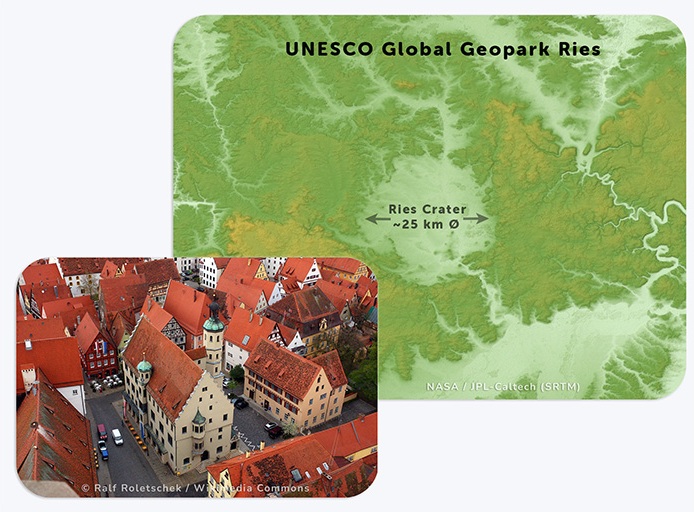
3-day excursion to the UNESCO Global Geopark Ries, Europe‘s best-preserved impact crater and hosting the historic town of Nördlingen within its crater walls.

We strongly recommend sturdy boots, rain/sun protective clothing, and a drinking bottle.

Cost: € 350

Dates

  • Saturday, 15. August (9 a.m.) to Monday, 17. August (7 p.m.)

Accomodation

  • Overnight accommodation in the “Hey Lou Hotel”, in Nördlingen (double rooms, for single use)

Lead by

  • Harry Hiesinger, Carolyn van der Borgen and Gordon Osinski

Party size

  • 20 persons

Included in the price:

  • Coach transfers to and from Frankfurt University
  • Visit to various sites of the Ries impact crater
  • Entry and tour of Rieskrater Museum in Nördlingen
  • Entry to the bell tower of the church of St. George’s
  • 2 nights hotel accommodation in double rooms (single use)
  • Hotel breakfast on Sunday and Monday morning 
  • Lunch packets on Saturday, Sunday and Monday

Not included in the price:

  • Dinner on Saturday and Sunday evening

Highlights


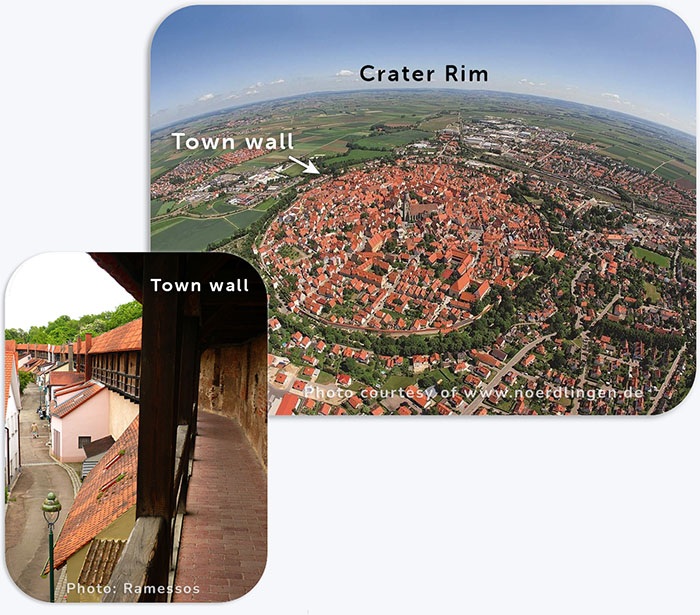
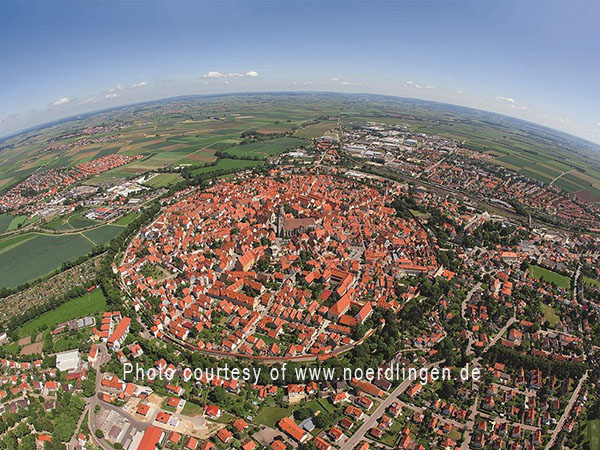
  • This field trip will bring you in a three-hour long drive from Frankfurt to Nördlingen, a medieval city inside the 25-km Nördlinger Ries impact crater. Picturesque Nördlingen is one of only three cities in Germany that has a complete city wall from 1327. Your hotel will be located in town, so you will have ample opportunities to explore the charm of the city and walk along the city wall.
  • Journey by coach to one of the best preserved impact craters in Europe, the 15 million year old Ries Crater, about 3 hours southwest of Frankfurt/M.
  • We will have time to explore the medieval town of Nördlingen, which is located within the Ries Crater itself, and walk around the ancient town wall.
  • With a tour of the Ries Crater Museum we will be able to familiarise ourselves with the geologic setting of the Ries crater.
  • After climbing the 90 m bell tower of the church of St. George, we can enjoy panoramic views across Nördlingen and out to the Ries crater rim.
  • We will explore several of the most important outcrops of the Ries Crater, also taking a closer look at the stratigraphy of Suevite and Bunte Breccia.
  • If time allows, we will also be able to visit a large lake inside the crater with beautiful stromatolites and fossilised snails, and visit the Ofnet caves.
  • For dinner each evening we can enjoy traditional German food in the local restaurants in Nördlingen.
  • Overnight accommodation (2 nights) is in Hotel Hey Lou in Nördlingen (double rooms for single use), with full breakfast.

Program

Following schedule outlines the planned sequence of activities, tasks, or events organized by specific days and times.


Early Morning: 

  • At 9:00 h we depart from Frankfurt by coach, arriving in Nördlingen around 12:00 – 12:30

Early Afternoon: 

  • We will visit the “Rieskrater Museum” to familiarize ourselves with the geologic setting of the Ries crater and the adjacent Steinheim Basin.
  • The impact happened about 15 Mio years ago onto an already partly eroded Jurassic carbonate platform with underlying Triassic Keuper sandstones and a few meters of superposed Tertiary sands. The Cretaceous rocks were mostly already eroded at the time of impact and the entire sedimentary stack rests on crystalline basement rocks (e.g., granites, gneisses, amphibolites) at a depth of about 600 m below the surface.
  • Of course, the impact produced its own lithologies, including the famous suevite and the Bunte Breccia. The Ries crater is one of the best locations to study the emplacement of impact lithologies and also allows one to study the post-impact modification of the crater.

later Afternoon: 

  • On Saturday afternoon, we will also climb the 90 m tall church tower of St. Georg, called “Daniel”. This will allow us to get an outstanding morphological overview of the crater itself with its related structures, i.e., the crater rim, the megablock zone, and the central ring. Should you be afraid of heights or have difficulties climbing up many stairs, don’t worry! You will have other opportunities to get a nice view across the crater.

Evening:

  • After the strenuous climb, we will end the day in a local restaurant to enjoy the excellent local cuisine.
  • Overnight accommodation is in the “Hotel Hey Lou” in Nördlingen, in double rooms (booked as single-use).

Full breakfast in hotel.
After breakfast we will explore some of the most important outcrops, including Alte Bürg, Aumühle, Gundelsheim, Hainsfarth, Lindle, Offnet caves, Polsingen, Unterwillfingen, and Wengenhausen, to name only a few of them.

  • At the Alte Bürg you will see suevite with sharp contacts to the Malmian limestones. At this outcrop, we will have a discussion of why the Ries crater was interpreted as a volcanic construct until 1961, when it became clear that, in fact, it is an impact crater.
  • Aumühle offers unique insights into the stratigraphy of suevite and Bunte Breccia, which we will discuss in detail.
  • A more complicated stratigraphy of suevite, Bunte Breccia and crystalline basement rocks can be seen in Unterwilfingen.
  • Wengenhausen offers further insight into the impact-induced effects on crystalline basement rocks, exposing a monomict and a polymict impact breccia in a single outcrop.
  • Situated between the structural crater rim and the inner central ring are the Offnet caves within a very large megablock.
  • At the Lindle outcrop, we will see the effects of the brecciation on the Jurassic rocks and in parts the inverted stratigraphy.
  • Gundelsheim is famous for its striation marks on top of the Malmian limestones, which were formed by the emplacement of the Bunte Breccia. Polsingen, although a very small outcrop, will give you access to a rock with crystalline fragments in a melt matrix, known as the so-called “red suevite”.
  • Finally, in Hainsfarth, we can explore the post-impact evolution of the Ries, which included the formation of a large lake inside the crater. Here you will see beautiful stromatolites and fossilized snails.

It might be that we have to skip one or the other outcrops due to bad weather or time constraints.

Full breakfast in hotel.
After a few outcrops on Monday, we will drive back to Frankfurt, arriving 7:00 pm.

Note:

  • You will be allowed to take samples.
  • Please make sure to bring sturdy shoes and rain/sun gear, as we will spend most of the days in the field.
  • We will try to return to Nördlingen at about 5:00 to 5:30 pm each day to give you enough time to prepare yourself for dinner.

Rhine & Wine


Boat cruise down the Rhine river through the UNESCO World Heritage Upper Middle Rhine Valley, with a wine-tasting stroll through vineyards, a castle tour and cable car rides.

We recommend sturdy footwear, rain/sun protection and a drinking bottle.

Cost: € 300

Dates

  • Saturday 15. August (9 a.m.) to Sunday, 16. August (8 p.m.)

Accomodation

  • Overnight accommodation in the “Hotel am Markt” in St. Goar (double rooms, for single use)

Lead by

Party size

  • 16 persons

Included in the price:

  • Coach transfers to and from Frankfurt University
  • Two boat rides (3 hrs and 2 hrs) along the Rhine
  • Coffee with cake buffet in St. Goar
  • Wine-tasting walk (~6 km, 7 wines)
  • Hotel accommodation in double rooms (single use)
  • Hotel breakfast on Sunday morning 
  • A guided tour of Rheinfels Castle
  • A chair-lift ride and a cable-car ride

Not included in the price:

  • Lunch/snacks (on board the boat)
  • Dinner on Saturday night

Highlights


  • Our boat trip takes us down the Rhine river through the valley with the highest density of castles in the world, passing numerous historic castles, the quirky mouse tower and the famous Loreley Rock. Sankt Goar lies in the narrow Rhine Gorge, carved out of the devonian-deposited and carboniferous-folded slate rock during more recent uplift to leave the river contained within steep walls 200 m high. The Upper Middle Rhine Valley was added to the UNESCO list of World Heritage Sites in June 2002 because of its beauty as a cultural landscape with wine-growing terraces up the steep slopes of the Rhine gorge.
  • We take a boat cruise down the Rhine river along the Rheingau wine-growing region, passing by the famous Loreley Rock.
  • At the historic town of St. Goar we enjoy a wine-tasting tour at the Phlipps-Mühle vineyard, strolling through the vinefields on the western slopes of the Rhine.
  • A visit to Rheinfels Castle includes a guided tour and stunning views of the Middle Rhine Valley, a UNESCO World Heritage Site.
  • Overnight accommodation is in double rooms (single use) in the Hotel am Markt in St. Goar.
  • A boat cruise back up the Rhine river takes us to Assmannshausen where we enjoy a chair-lift up the eastern slopes of the Rhine.
  • A gentle walk to the Niederwald Monument and Temple offers panoramic views over the vineyards and across the Rhine.
  • Descending by cable car, we take time to explore at leisure the famous and historical town of Rüdesheim.

Program

Following schedule outlines the planned sequence of activities, tasks, or events organized by specific days and times.


9:00

departure from Frankfurt by coach, arriving in Rüdesheim around 10:15-10:30

11:00

boat cruise (downriver) through the Rhine Valley

  • snacks/lunch/drinks (as desired) on board

13:00

arrive at historic town of St. Goar

13:10

gentle walk up to the vineyard Philipps-Mühle, arrive around 13:30

13:30

coffee with German cake buffet

14:00

wine-tasting stroll through the vinefields with views over the Rhine river.

17:00

return (on foot or bus) to town centre and check-in at Hotel am Markt. 

18:00

free time to explore St. Goar and have dinner

  • free choice of restaurants in St. Goar
  • if desired, we can book tables to eat in the hotel restaurant

Breakfast in hotel

10:15

gentle walk up to Castle Rheinfels (approx. 20 mins.)

11:00

guided tour of Castle Rheinfels (approx. 1 hour).

12:30

gentle walk down to the Rhine riverbank (approx. 20 mins)

13:00

upriver boat cruise through the Rhine Valley

  • snacks/lunch/drinks (as desired) on board

15:00

arrive at Assmannshausen

15:30

cable car up the Rhine slopes

16:00

gentle stroll along the top of the Rhine slopes, view over the Rhine

16:30

arrive at Niederwald Temple and Monument

17:00

free time to descend to Rüdesheim in cable car at leisure and explore Rüdesheim

  • if desired, eat/drink in Rüdesheim

19:00

depart Rüdesheim by coach, arriving in Frankfurt around 20:00